Most drainage problems in Lincolnshire do not start with flooding. They start quietly.
A lawn that never quite dries. Gravel that stays damp for days. A driveway where water always finds the same low spot. These are the early signs, and they are easy to ignore until heavier rain turns inconvenience into damage.
The difficulty is that once water starts causing visible problems, it has usually been behaving badly underground for a long time. Fixing it properly means understanding how that water moves through the ground, not just where it ends up on the surface.
This is what effective drainage solutions for Lincolnshire properties are really about.
Why drainage behaves differently across Lincolnshire
One of the biggest mistakes people make is assuming drainage works the same everywhere.
Across Lincolnshire, clay soil is common. Clay holds water rather than letting it pass through. In practical terms, that means rain sits in the ground longer and looks for routes sideways instead of down.
In rural areas, drainage systems may be decades old. In towns, gardens and open ground have gradually been replaced with paving and driveways. Each change reduces the land’s ability to absorb water naturally.
When rainfall increases, as it has in recent years, those systems reach their limits faster than expected.
What proper drainage actually means in practice
Good drainage is rarely one single feature. It is a combination of small decisions that work together.
It involves understanding where water enters the site, how it moves once it lands, and what happens when the ground underneath is already saturated. That last point is often overlooked.
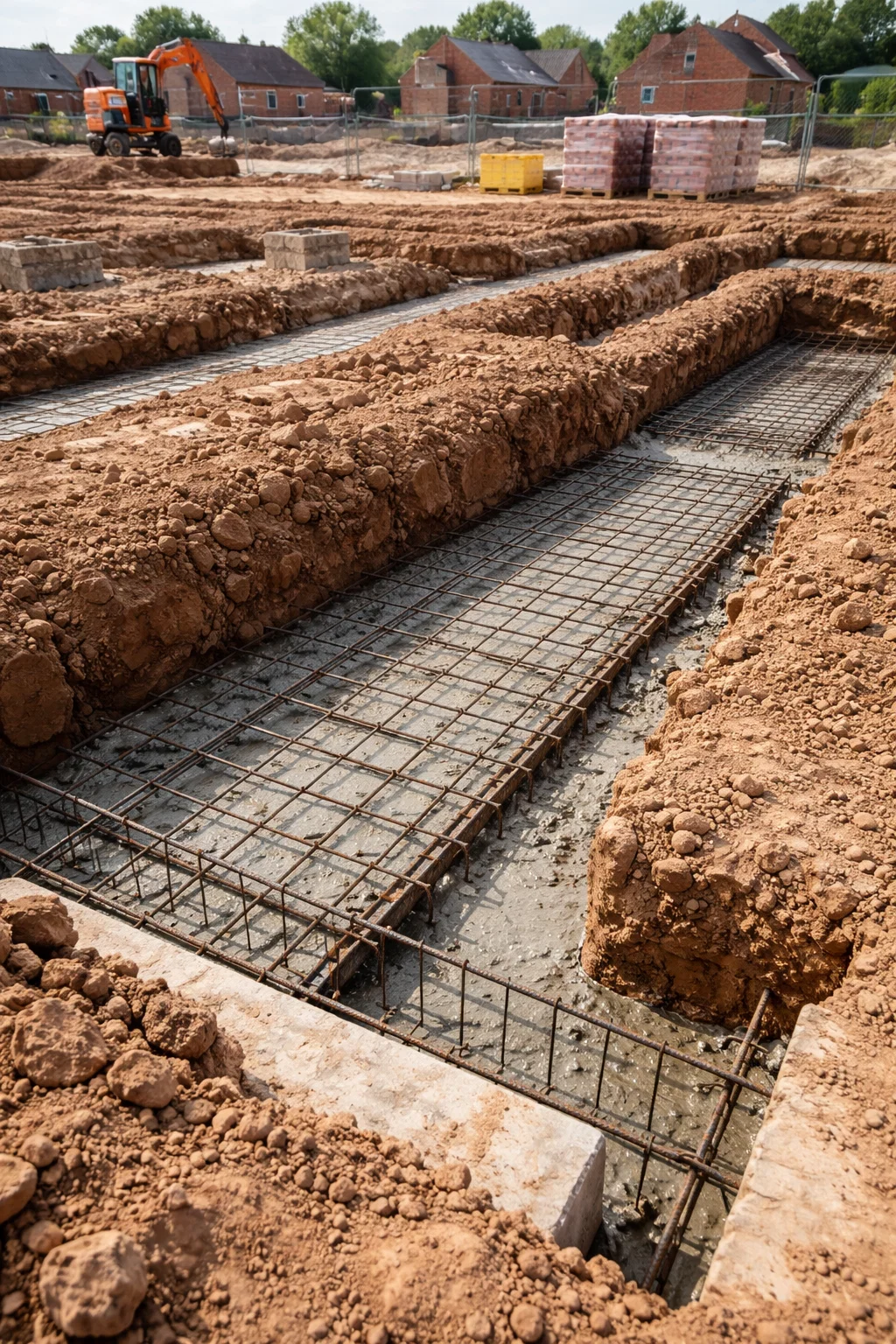
This is why drainage is closely tied to proper groundworks. Without correct excavation, levels and backfill, even well-designed drainage components struggle to perform as intended.
The most common drainage solutions used locally
There is no standard solution that fits every property. However, certain approaches are used frequently across Lincolnshire because they work when installed correctly.
Surface water control
Surface water drainage deals with rain that falls on roofs, paths and driveways. This usually involves channels, gullies and careful grading to guide water away from buildings.
Poorly set falls are a common issue. Even a small error in level can send water towards a property instead of away from it.
Soakaways
Soakaways allow water to disperse into the surrounding ground. They can work well, but only where soil conditions allow.
In clay-heavy areas, soakaways must be sized properly and positioned carefully. Many failures happen because they are installed without proper testing.
French drains
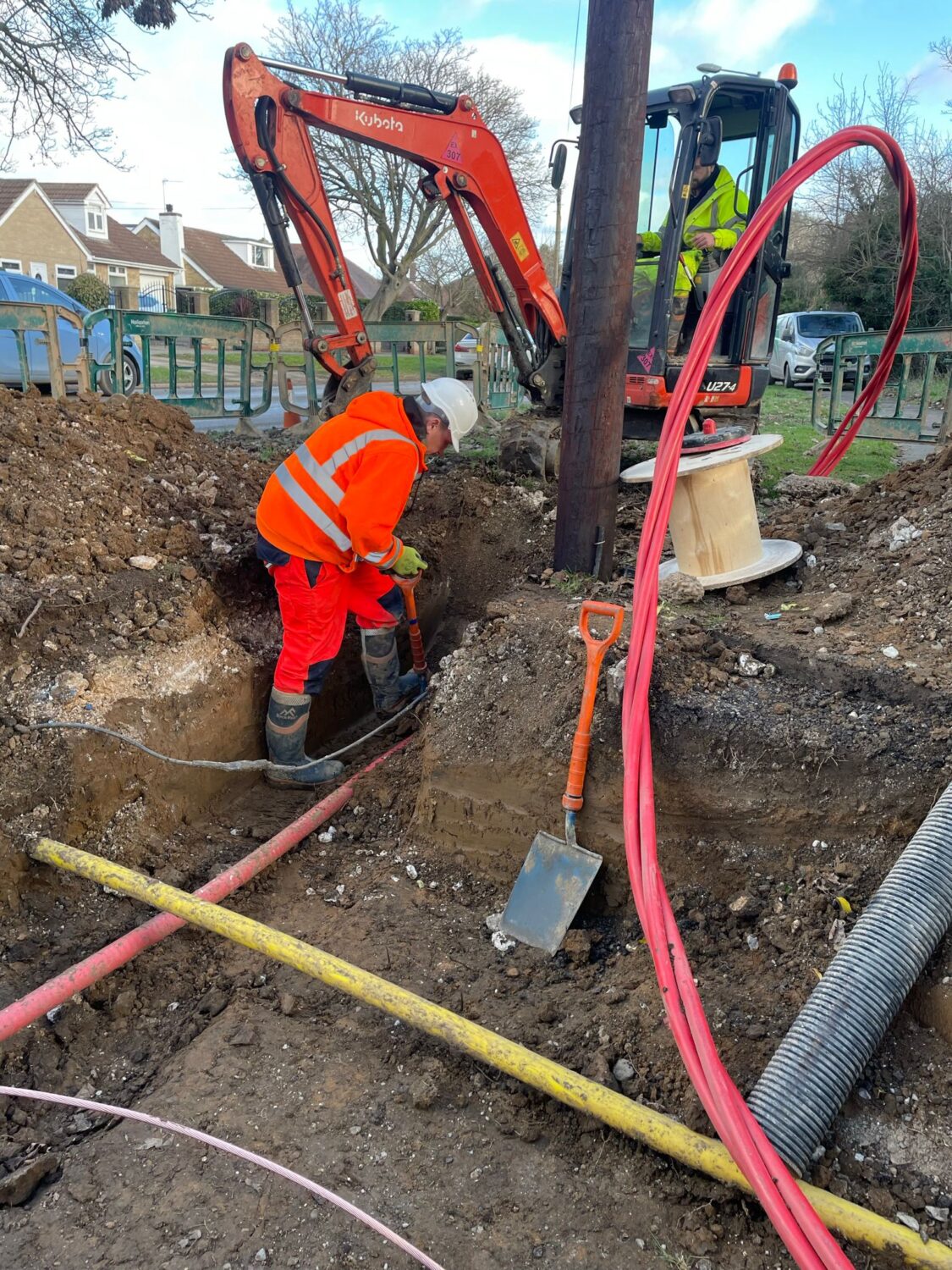
French drains are often used where water builds up slowly rather than flooding suddenly. They redirect moisture away from lawns, boundaries and foundations.
They are simple in concept, but rely heavily on correct depth, gradient and backfill material.
Integrated foul drainage
Although separate from surface water systems, foul drainage often intersects with groundwork planning. Mistakes here can cause long term maintenance and compliance issues.
Drainage and building work go hand in hand
Drainage problems often appear after construction, not before.
Extensions, new driveways and patios all change how water behaves. Ground that once absorbed rainfall may now shed it towards a property instead.
This is why drainage should be considered at the same time as foundations and access works, not added later as a fix. Many projects combine drainage installation with Buildable’s specialist drainage services so systems are designed into the build rather than retrofitted.
How good drainage actually prevents flooding
Flood prevention is not about removing water entirely. That is unrealistic.
It is about slowing water down, giving it somewhere controlled to go, and preventing pressure from building around structures.
Over time, effective drainage reduces movement around foundations, protects paved areas from failure, and limits moisture-related damage that often goes unnoticed until repairs are needed.

Why ground preparation matters more than most people think
Drainage systems rely on what surrounds them.
Incorrect excavation, poorly compacted backfill or unsuitable materials can cause systems to collapse or clog. Once that happens, the symptoms often appear far from the original fault.
This is why experienced contractors look at drainage and ground conditions together, rather than treating them as separate tasks.
Planning and compliance considerations
Some drainage work falls under permitted development. Other situations require closer attention.
This can include:
- Connecting to public drainage systems
- Installing impermeable surfaces
- Working near boundaries or highways
- Properties in conservation areas
A contractor familiar with Lincolnshire regulations will factor this in early, avoiding delays later.
Cost considerations and expectations
Drainage costs vary because problems vary.
A simple surface water issue may require only minor work. More complex sites need excavation, redesign and integration with existing systems.
What matters is value over time. A cheap fix that fails in two winters costs far more than a properly designed system installed once.
Mistakes that make drainage problems worse
Many issues escalate because early signs are ignored.
Common errors include:
- Treating drainage as cosmetic
- Installing surface solutions without addressing ground behaviour
- Choosing fixes based on price alone
- Waiting until damage appears
Water always finds the weakest point. Good drainage removes those weaknesses.
Choosing the right drainage contractor in Lincolnshire
Drainage work rewards patience and experience.
Look for contractors who:
- Inspect the site rather than guessing
- Explain why a solution is suitable
- Understand local ground conditions
- Integrate drainage with groundwork and construction
Clear explanations are often a sign of confidence and competence.
FAQs: Drainage solutions for Lincolnshire properties
Why does water sit on my driveway after rain?
This is usually caused by poor levels or inadequate drainage below the surface.
Can drainage issues affect my foundations?
Yes. Prolonged moisture increases ground movement and pressure around structures.
Are soakaways always suitable?
No. Soil type and water table levels must be assessed first.
Should drainage be installed before other work?
Ideally, yes. Early planning avoids retrofitting later.
Can existing drainage be improved?
Often it can, but only after understanding why it is struggling.
Final thoughts
Good drainage is invisible when it works. That is why it is often overlooked.
Across Lincolnshire, preventing flooding properly means understanding the ground, planning water movement carefully, and installing systems designed for local conditions rather than generic solutions.
If you are dealing with recurring water issues or planning work that will change how water moves around your property, early advice from a local specialist can prevent problems that are far harder to resolve once they surface.