Rutland might be England’s smallest county, but when it comes to building work, it presents its own set of challenges.
The villages are older. The plots are often tighter. Some areas sit on mixed soil. Others drain better than you would expect. It is rarely as simple as turning up with a digger and getting started.
When people search for groundworks Rutland, they are usually planning something meaningful. A home extension. A new build. A garage conversion that requires deeper foundations than first assumed. What they may not realise is that the visible part of the project depends entirely on what happens first, below ground.
That early stage does not attract much attention. It should.
Why groundworks matter more than most homeowners think
The easiest part of any project to appreciate is what you can see. Brickwork rising. Steel going in. Roof trusses landing in place.
Groundworks are different. They disappear once complete. Yet if something is wrong at this stage, it does not stay hidden for long.
In Rutland especially, older properties often sit on foundations that would not meet current standards. Extensions tied into those structures need careful preparation. New builds on previously undeveloped land need proper assessment before excavation begins.
This is not just about digging trenches. It is about understanding how the ground behaves.
That is where professional groundworks services come in. Planning first. Excavating second.
What groundworks in Rutland usually involve
The scope changes depending on the project, but certain stages appear consistently.
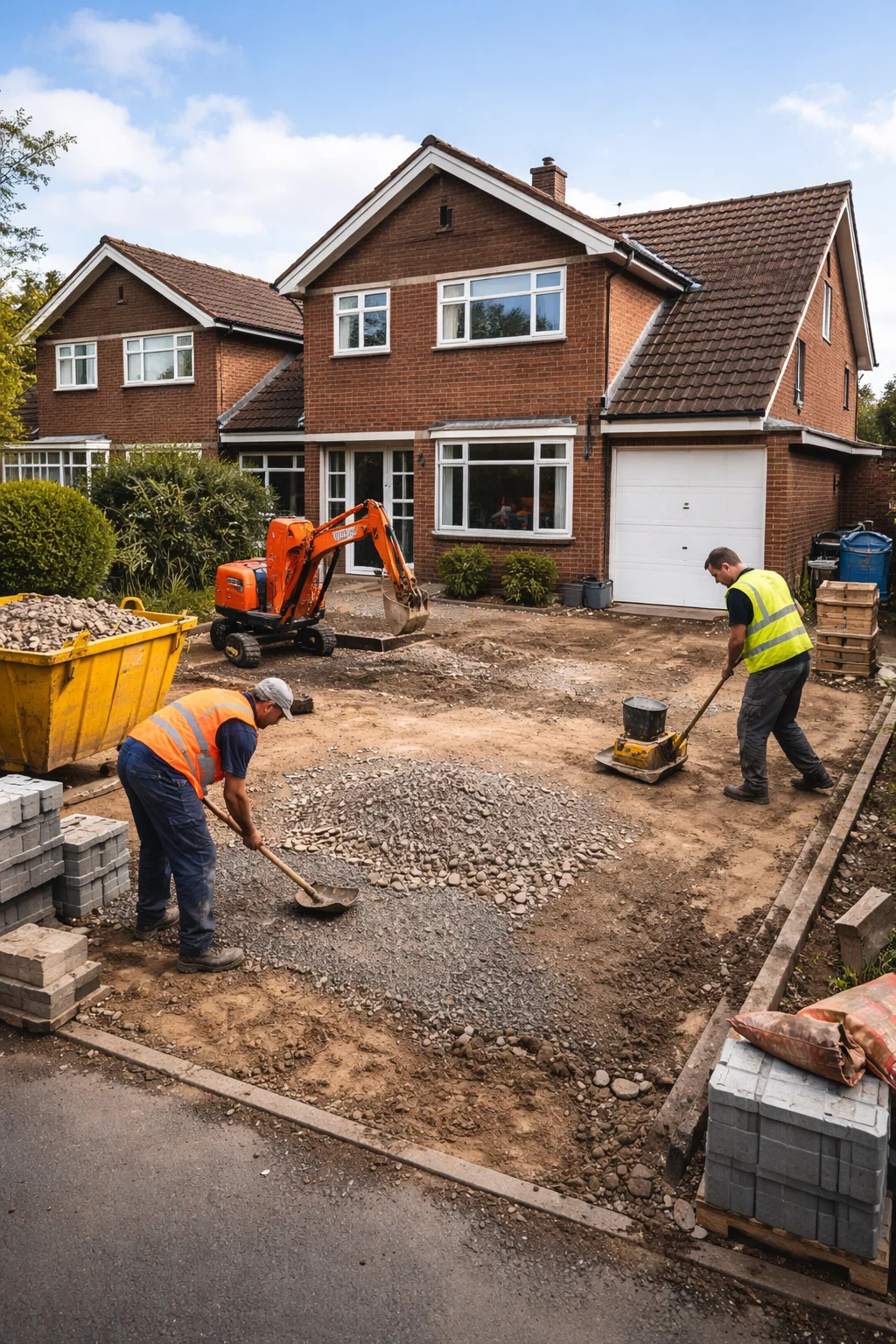
Site preparation
Before foundations are even considered, the site needs to be cleared and set out properly.
This might involve removing old patios, lifting sections of garden, clearing vegetation or breaking out redundant concrete. In rural Rutland, it is not uncommon to discover unexpected ground conditions once excavation starts.
Taking time at this stage avoids disruption later.
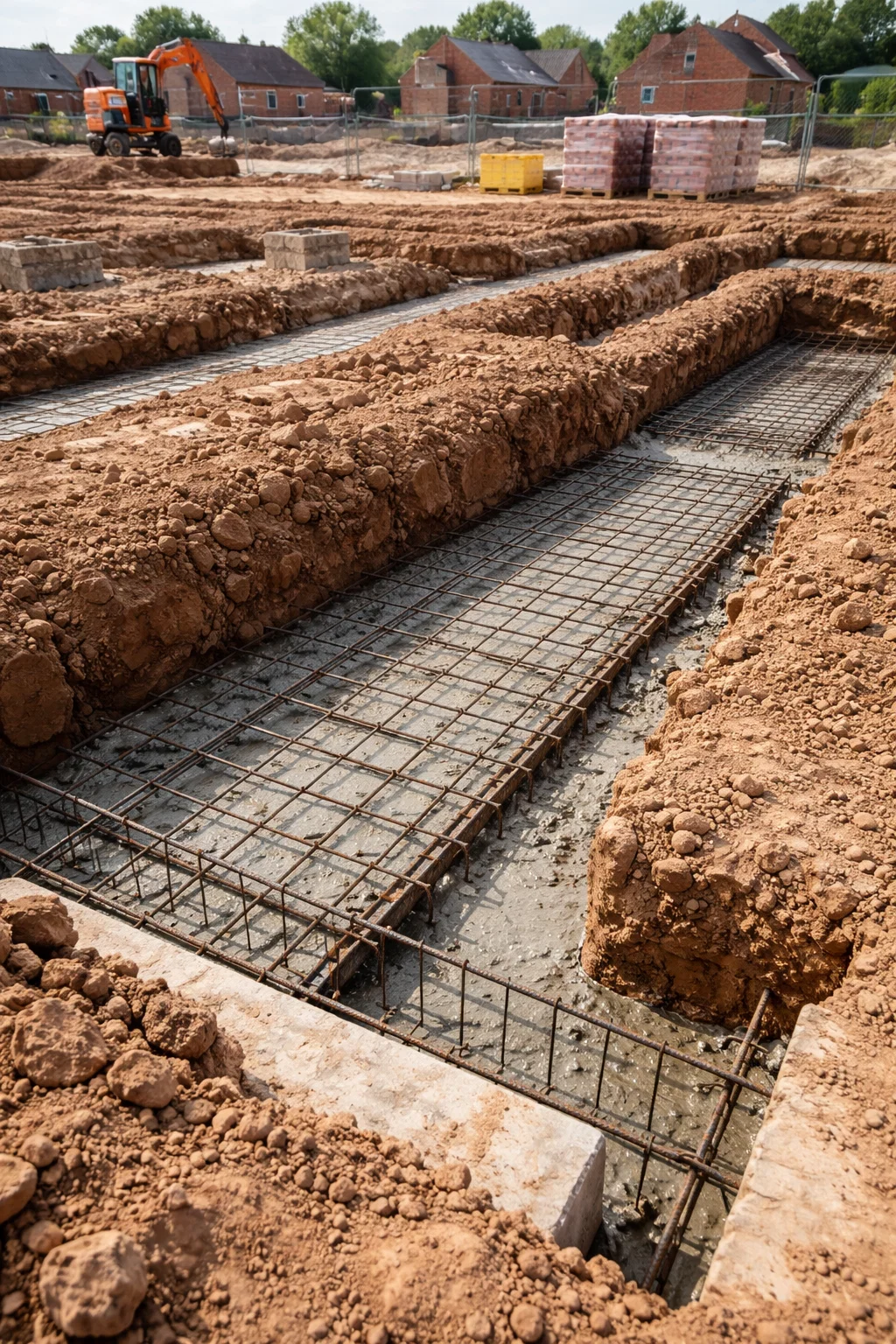
Excavation and foundations
Foundation depth depends on soil type, nearby trees and structural design.
Rutland includes areas of clay and areas of lighter soil. Both behave differently. Clay can expand and contract with moisture levels. Lighter soil may require different compaction methods.
Excavation is carried out to agreed levels, but experienced contractors know to adjust approach if conditions change once ground is opened up.
Precision matters here. Once concrete is poured, correction becomes difficult.
Drainage integration
Drainage should never be treated as an afterthought.
Extensions, new patios and additional roof areas all change how water moves around a property. In some Rutland villages, older drainage systems are already under strain.
Integrating proper drainage during groundwork avoids long term moisture problems. This often links with specialist drainage solutions where surface water needs to be redirected safely.
Water always finds a path. The aim is to control it rather than react to it.
Oversite and slab preparation
Once foundations are complete, preparation for floor slabs or oversite begins.
Compaction, insulation placement and moisture control all play a role. Uneven compaction at this stage can create issues that only become visible years later.
Ground preparation may not be glamorous, but it is what protects the investment above it.
Groundworks for home extensions in Rutland
Extensions deserve particular attention.
Older cottages in Rutland often have shallow foundations. When extending, new foundations must be designed to work alongside the original structure.
This sometimes requires underpinning sections of existing walls or carefully sequencing excavation so the building remains stable.
Good groundwork ensures that the extension does not introduce stress to the original property.
Groundworks for new builds in Rutland
New builds bring a different set of considerations.
Agricultural land, infill plots and village edge developments all have varying ground histories. Fill material, drainage patterns and soil depth may not be immediately obvious.
Site assessment is essential before excavation begins.
Professional contractors will consider:
- Soil stability
- Access for machinery
- Drainage routes
- Levels relative to neighbouring properties
- Utility connections
Rushing the early stage to accelerate visible progress is rarely wise.
How much do groundworks cost in Rutland?
Costs vary, and any fixed figure should be treated cautiously.
Factors influencing pricing include:
- Size and footprint of the build
- Depth of foundations
- Soil conditions
- Drainage complexity
- Access restrictions
- Removal of spoil
Smaller extensions may involve modest groundwork compared to full new builds, but even minor projects benefit from proper assessment.
The cheapest option is rarely the most reliable in the long term.
Why local experience in Rutland makes a difference
Rutland is compact, but ground conditions can shift from one village to the next.
Contractors familiar with local projects recognise patterns. They understand how certain soils respond to rainfall. They know where drainage tends to be problematic.
That experience reduces guesswork.
It also means practical decisions are made on site, not just on paper.
Common mistakes during groundwork preparation
Some problems appear repeatedly.
These include:
- Underestimating drainage requirements
- Failing to allow contingency for soil conditions
- Choosing based on price alone
- Ignoring early signs of ground instability
Groundworks are the stage where patience pays off.
Once the build rises above ground level, correcting mistakes becomes more disruptive and expensive.
What to expect from professional groundworks contractors in Rutland
A competent contractor will not provide an instant quote without seeing the site.
You should expect:
- A site visit before pricing
- Clear explanation of scope
- Honest discussion of ground conditions
- Coordination with structural engineers where required
- Realistic timelines
Communication at this stage sets the tone for the rest of the project.
FAQs: Groundworks Rutland
How long do groundworks for an extension usually take?
Most residential extension groundworks take one to two weeks, depending on size and soil conditions.
Are soil tests necessary in Rutland?
Not always, but for larger or more complex builds they may be recommended to confirm load bearing capacity.
Can groundworks begin before planning permission is granted?
Typically no. Planning approval and building control requirements should be confirmed first.
Does drainage always need to be updated during an extension?
Often yes, especially if roof area or hard surfaces increase.
What happens if poor ground is discovered during excavation?
An experienced contractor will reassess and recommend appropriate adjustments before proceeding.
Final thoughts
Groundworks in Rutland are not about speed. They are about stability.
Whether preparing for a home extension or a new build, careful groundwork ensures the structure above performs properly for years to come.
When searching for groundworks Rutland, the real question is not simply who can dig foundations. It is who understands how the ground behaves and plans accordingly.
Handled well, this early stage creates confidence that carries through the entire build.