Commercial sites behave differently from domestic ones.
There is more pressure, more weight, more compliance, more at stake if something is wrong beneath the surface.
When businesses search for commercial groundworks Lincolnshire, they are rarely looking for decorative improvements. They are preparing land for warehouses, units, access roads, yard space or industrial development, and in those environments, groundwork is not just preparation, it is risk management.
This article explains what commercial groundworks actually involve, why Lincolnshire conditions matter, and what proper industrial site preparation should look like before a single structure is built.
Why commercial groundworks require a different approach
Residential groundwork is usually measured in rooms or extensions.
Commercial groundworks are measured in tonnes, traffic loads and long term structural performance.
Industrial buildings place significant pressure on the ground. Forklifts, delivery vehicles, articulated lorries and heavy storage systems create repeated load cycles. If the base is not prepared correctly, failure is not gradual. It is expensive.
In Lincolnshire, where soil can shift between clay-heavy inland areas and lighter agricultural ground, assumptions cannot be made without inspection.
This is why proper groundworks planning always begins with a site visit rather than a spreadsheet.
What commercial groundworks in Lincolnshire typically include
The scope varies depending on the type of development. However, most commercial projects share several key stages.
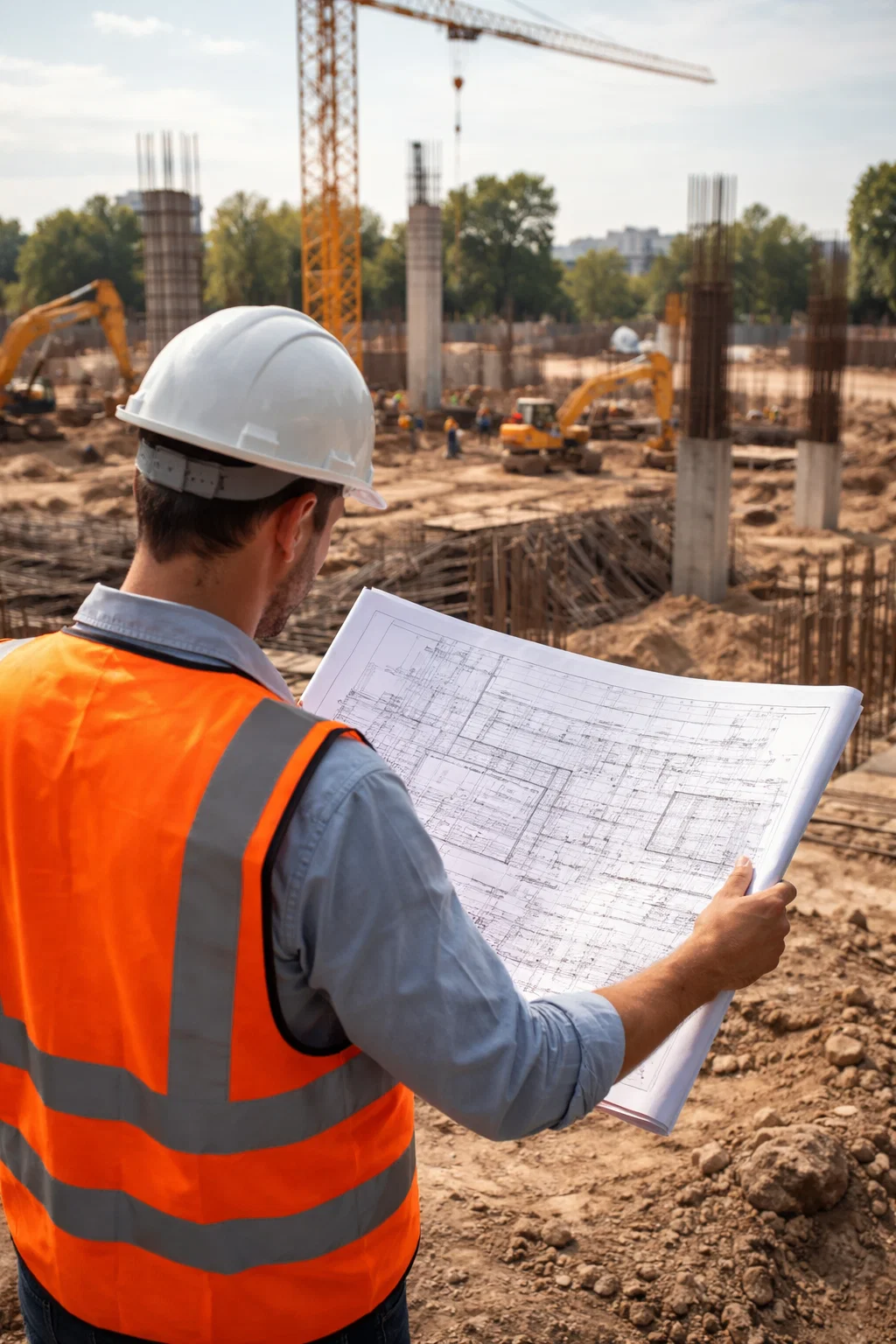
Site clearance and enabling works
Before excavation even begins, the site must be prepared.
This may involve:
- Vegetation clearance
- Removal of old concrete slabs
- Demolition of redundant structures
- Levelling uneven ground
- Managing contaminated material if present
Commercial sites often reveal surprises once work begins. Old drainage runs, buried services and inconsistent fill are common on previously developed land.
A cautious, investigative approach at this stage prevents disruption later.
Excavation and formation levels
Commercial builds require precise formation levels.
Excavation is carried out to agreed depths, accounting for soil strength and load bearing requirements. Unlike domestic projects, tolerance for error is minimal.
Compaction testing may be required to confirm stability. This is particularly important where large floor slabs or reinforced bases are planned.
Ground that appears stable on the surface can behave differently under sustained commercial load.
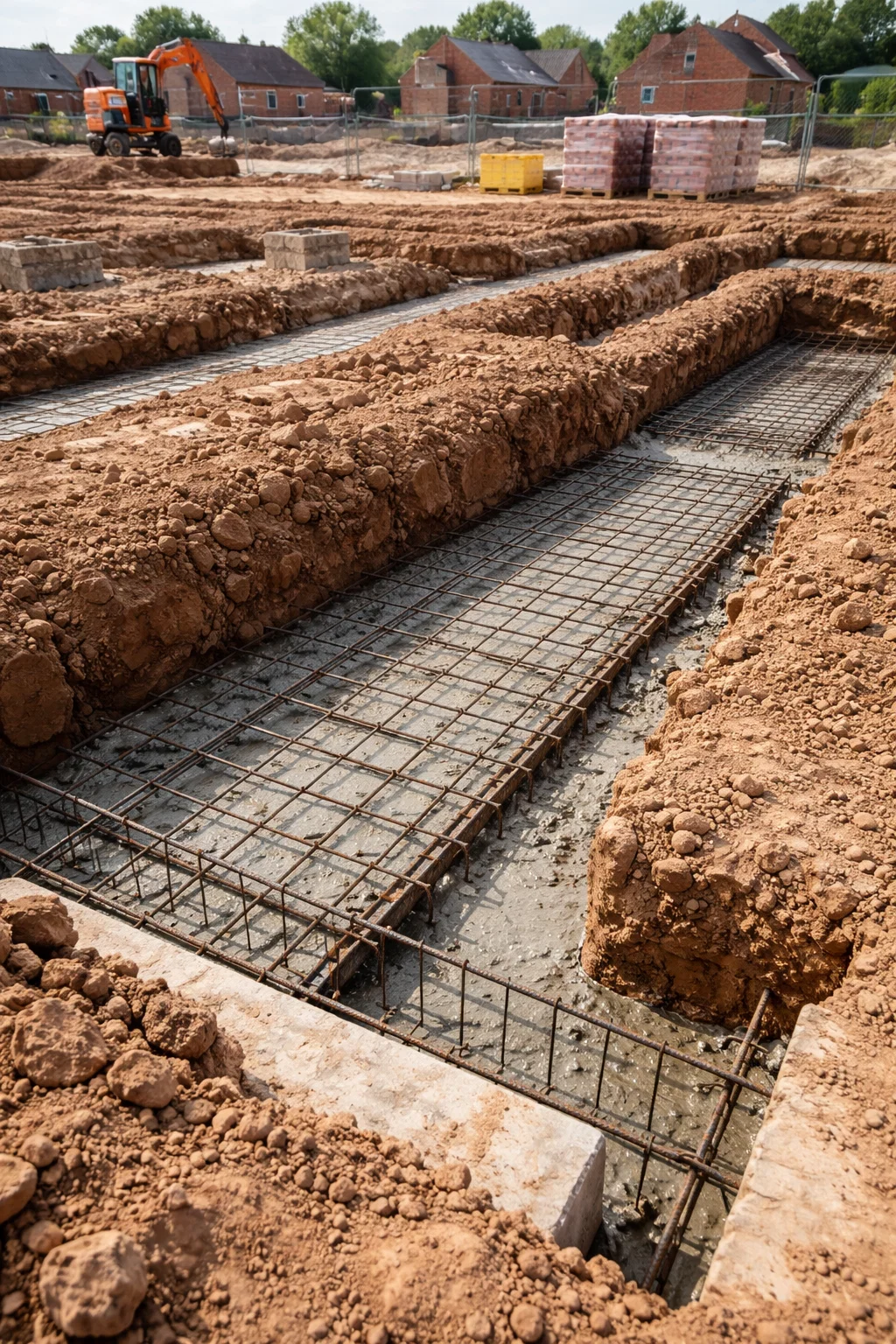
Foundations for industrial buildings
Foundation design for industrial or business units is typically specified by structural engineers. However, execution on site determines whether that design performs as intended.
This may include:
- Reinforced concrete foundations
- Pad foundations for steel frames
- Ground beams
- Raft slabs
Each solution depends on soil condition, building size and intended usage.
In Lincolnshire, ground variability means depth and reinforcement requirements often differ from site to site, even within the same county.
Drainage and surface water management
Drainage on commercial sites is rarely simple.
Large roof areas produce significant runoff. Yard space increases impermeable surface area. Access roads redirect water flow.
Proper drainage is therefore integrated into groundwork planning from the beginning. This links directly with specialist drainage services where surface water and foul systems must be installed to regulatory standards.
Failure to manage commercial drainage correctly can lead to operational disruption, not just inconvenience.
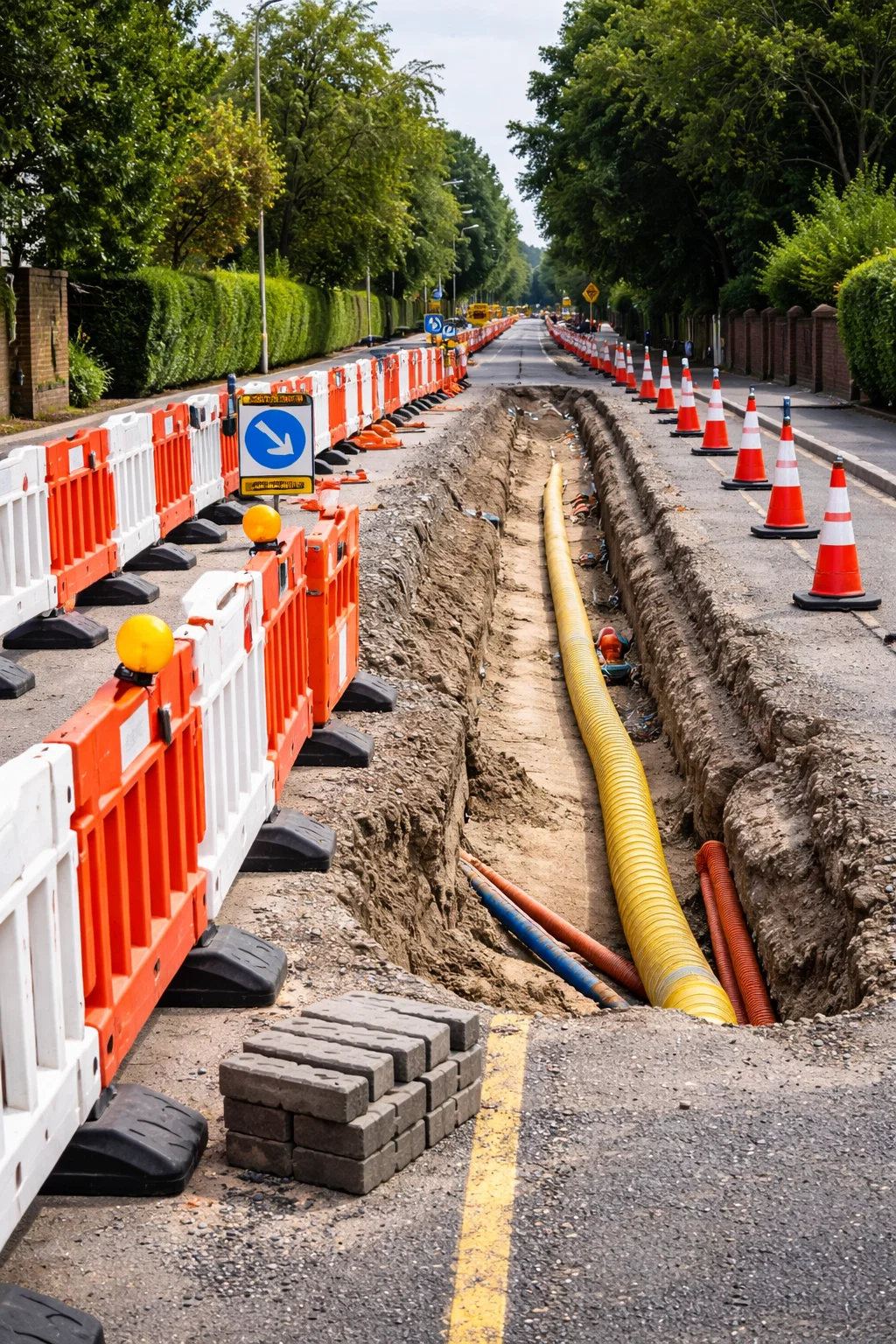
Service trenches and utility civils
Industrial sites require coordinated installation of utilities.
This may involve trenching for:
- Water
- Electricity
- Data
- Gas
- Surface water systems
Service routing must align with future building layout and operational needs.
Reworking buried services on a live commercial site is disruptive and costly. Proper planning reduces that risk.
Access roads and yard construction
Commercial groundworks often include preparation for access routes and heavy-duty yard areas.
These require:
- Deep sub-base installation
- Reinforced surfacing layers
- Accurate drainage falls
- Consideration of vehicle turning circles
Unlike domestic driveways, these areas must withstand regular heavy use.
Compaction and material choice matter more than appearance.
Why Lincolnshire conditions matter for commercial projects
Lincolnshire is often viewed as straightforward, largely flat and rural.
In reality, conditions vary considerably.
Clay soils inland can expand and contract. Former agricultural land may contain inconsistent fill. Coastal areas bring additional water management considerations.
Commercial developers sometimes underestimate how these factors influence foundation depth and drainage design.
Local experience reduces that uncertainty.
Cost considerations for commercial groundworks in Lincolnshire
Commercial groundworks are rarely low-cost. However, the greater risk lies in underestimating the work required.
Factors influencing cost include:
- Site size
- Soil condition
- Ground remediation requirements
- Drainage complexity
- Load bearing specifications
- Access limitations
- Environmental compliance
Accurate pricing follows detailed assessment. Broad estimates without inspection are rarely reliable.
The cheapest quote can become the most expensive mistake if rework becomes necessary after structural installation.
Regulatory and compliance factors
Commercial developments face stricter scrutiny than domestic projects.
Groundworks must align with:
- Building control requirements
- Environmental standards
- Drainage regulations
- Utility provider specifications
- Planning conditions
Experienced commercial contractors understand how these elements interact.
Delays often occur when groundwork planning fails to account for regulatory sequencing.
What to expect from experienced commercial groundworks contractors in Lincolnshire
When appointing a contractor for commercial work, transparency and method matter.
You should expect:
- A detailed site assessment
- Clear sequencing plans
- Collaboration with engineers
- Open discussion of risks
- Realistic timelines
Commercial projects move quickly once above-ground construction begins. The groundwork phase must support that momentum, not slow it.
Communication is critical.
Common pitfalls in industrial site preparation
Certain mistakes appear repeatedly on commercial sites.
These include:
- Inadequate compaction testing
- Underestimating drainage capacity
- Failing to plan service routing properly
- Assuming uniform soil conditions across large plots
- Rushing the formation stage to meet deadlines
Once steel frames or concrete slabs are installed, correcting groundwork errors becomes exponentially more disruptive.
FAQs: Commercial groundworks Lincolnshire
How long do commercial groundworks take?
Timescales vary depending on site size and complexity. Smaller business units may require several weeks, while larger industrial developments can extend significantly longer.
Are soil tests required for commercial sites?
Often yes. Load bearing assessments and soil investigations are common for industrial developments.
Is drainage more complex on commercial sites?
Typically yes. Larger roof areas and yard surfaces produce more runoff, requiring integrated drainage planning.
Can groundwork begin before full planning approval?
In most cases, enabling works follow planning consent and agreed conditions. Regulatory sequencing should always be clarified first.
How do I choose the right commercial groundworks contractor in Lincolnshire?
Look for local project experience, clear communication and a methodical approach to site assessment rather than fast pricing.
Final thoughts
Commercial development does not forgive weak groundwork.
Across Lincolnshire, successful industrial and business sites begin with careful preparation beneath the surface. Formation levels, drainage integration, compaction and compliance all influence long term performance.
When businesses search for commercial groundworks Lincolnshire, they are ultimately seeking stability. Stability in load bearing, stability in drainage and stability in compliance.
Handled correctly, commercial groundworks create a foundation that supports not just a building, but the business operating within it.